
UCSD Hillcrest Medical Center Long Range Development Plan
UC San Diego’s academic medical campus is evolving—preparing for the future while staying true to its mission of innovation and excellence in healthcare. Page partnered with SmithGroup to develop the Master Plan and Long-Range Development Plan (LRDP) update, shaping a bold vision through 2030. This strategic framework integrates leading-edge healthcare, medical research, mixed-use development, and multi-modal circulation improvements to support the region’s only academic medical center.
UC San Diego Hillcrest is a vital urban health hub, serving a diverse patient population while driving breakthroughs in research, education, and patient care. The LRDP establishes smart growth and sustainability-focused planning principles, ensuring that future development aligns with UCSD’s world-class health mission.
With a context-sensitive approach, the plan elevates hospital redevelopment in harmony with its surrounding neighborhoods. More than an expansion, this vision redefines the academic medical center—integrating healthcare, community well-being, and urban connectivity into a next-generation model.
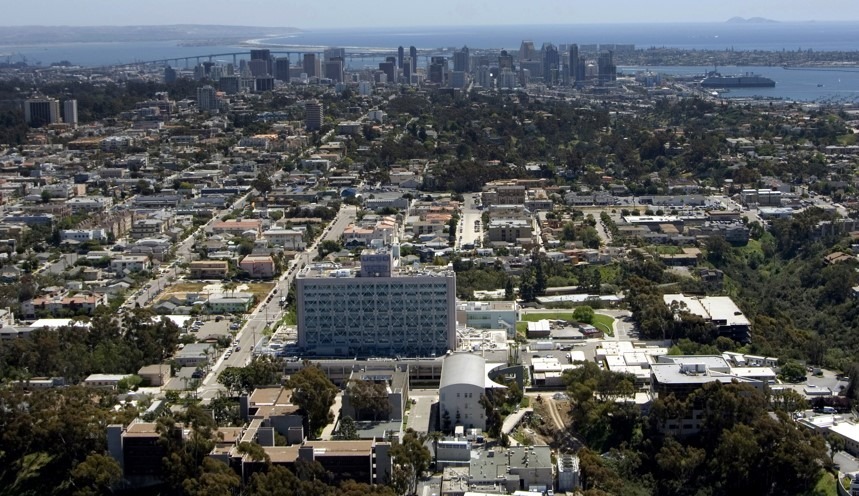
Urban form
UC San Diego Hillcrest has organically evolved since its founding in 1966, but the LRDP establishes a cohesive, future-focused framework to guide its transformation. This vision ensures a complete campus redevelopment, strengthening its role as a world-class academic medical hub where teaching, research, and patient care converge to drive innovation.
Existing campus urban form
Campus vision
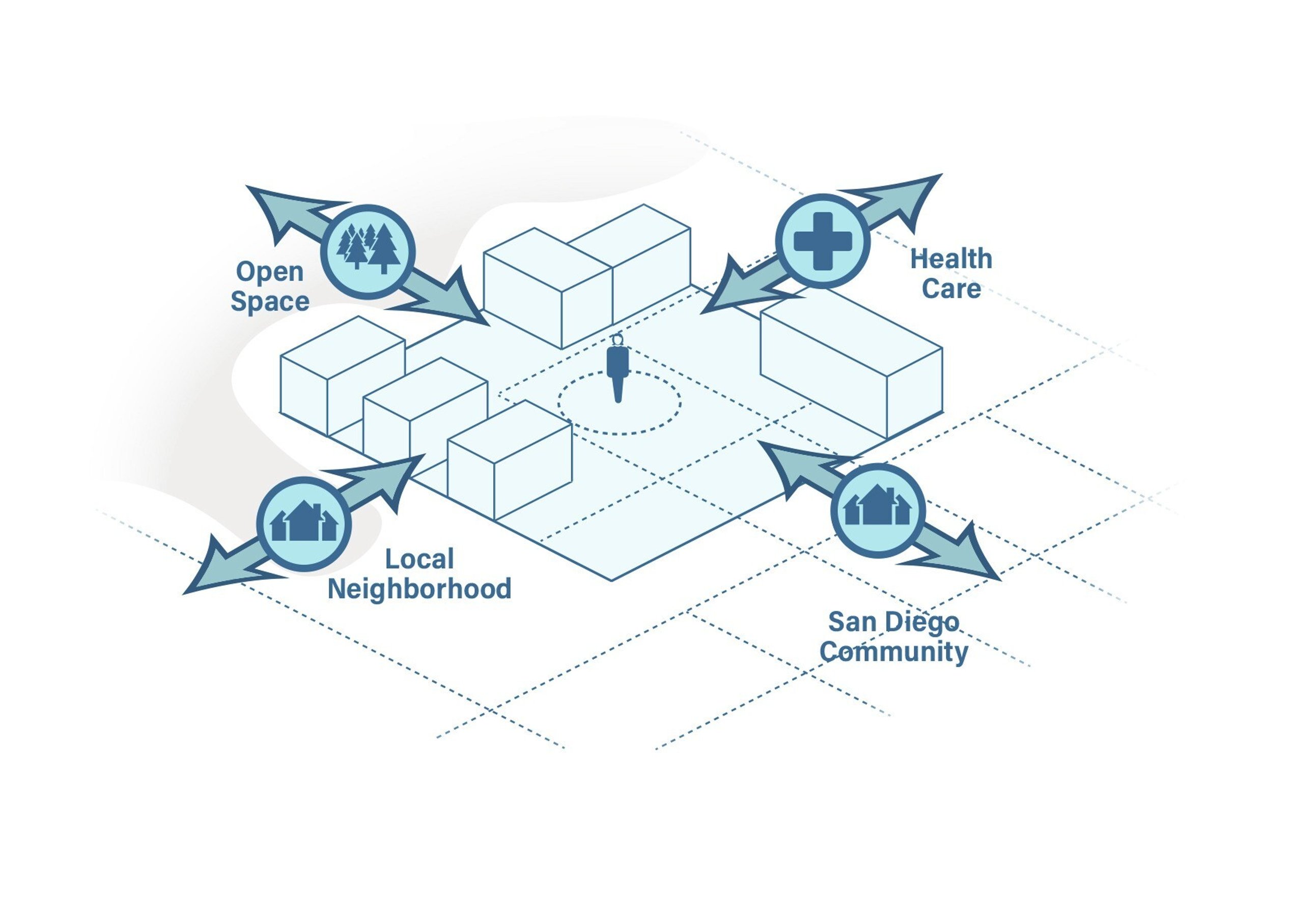
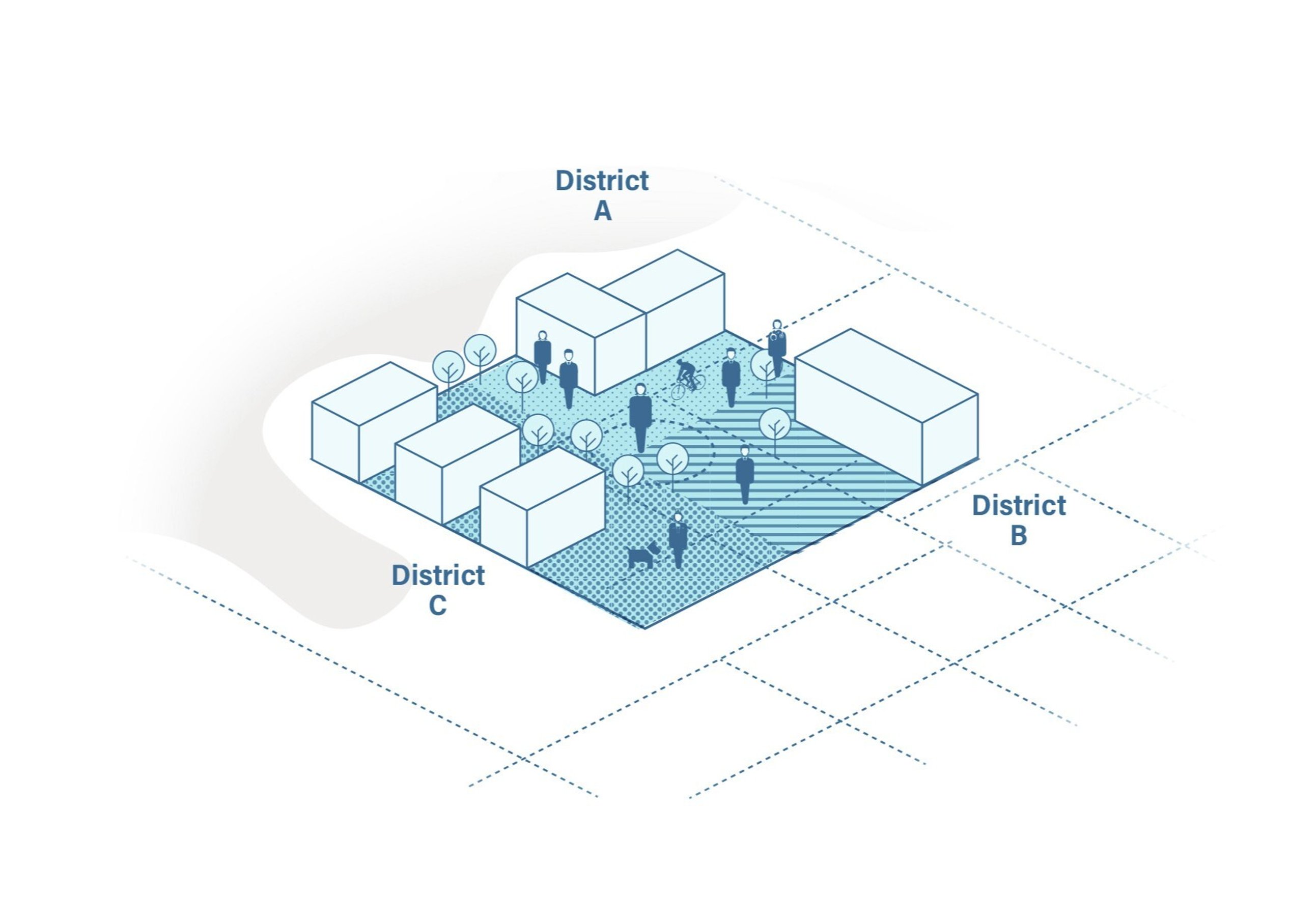
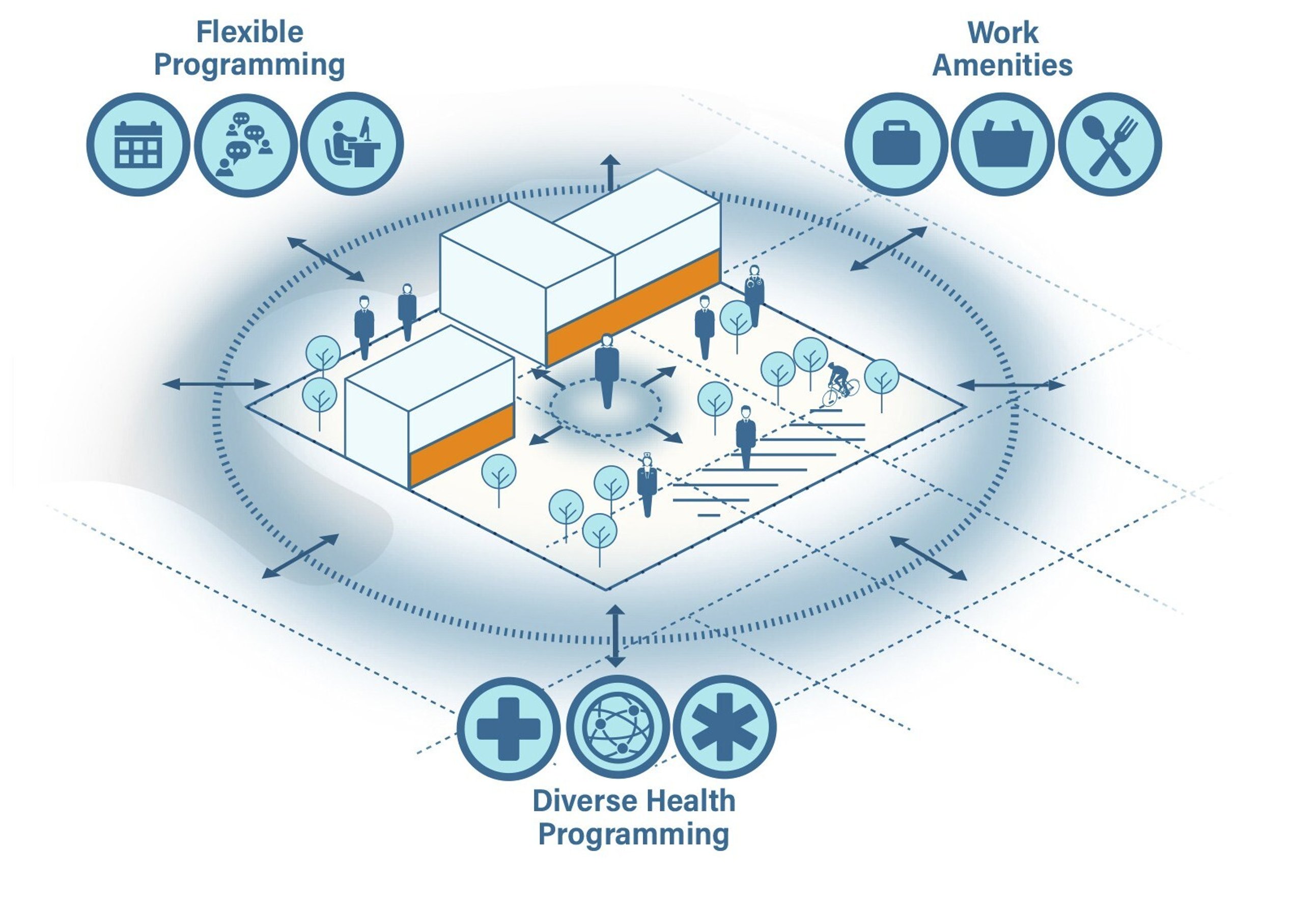
/

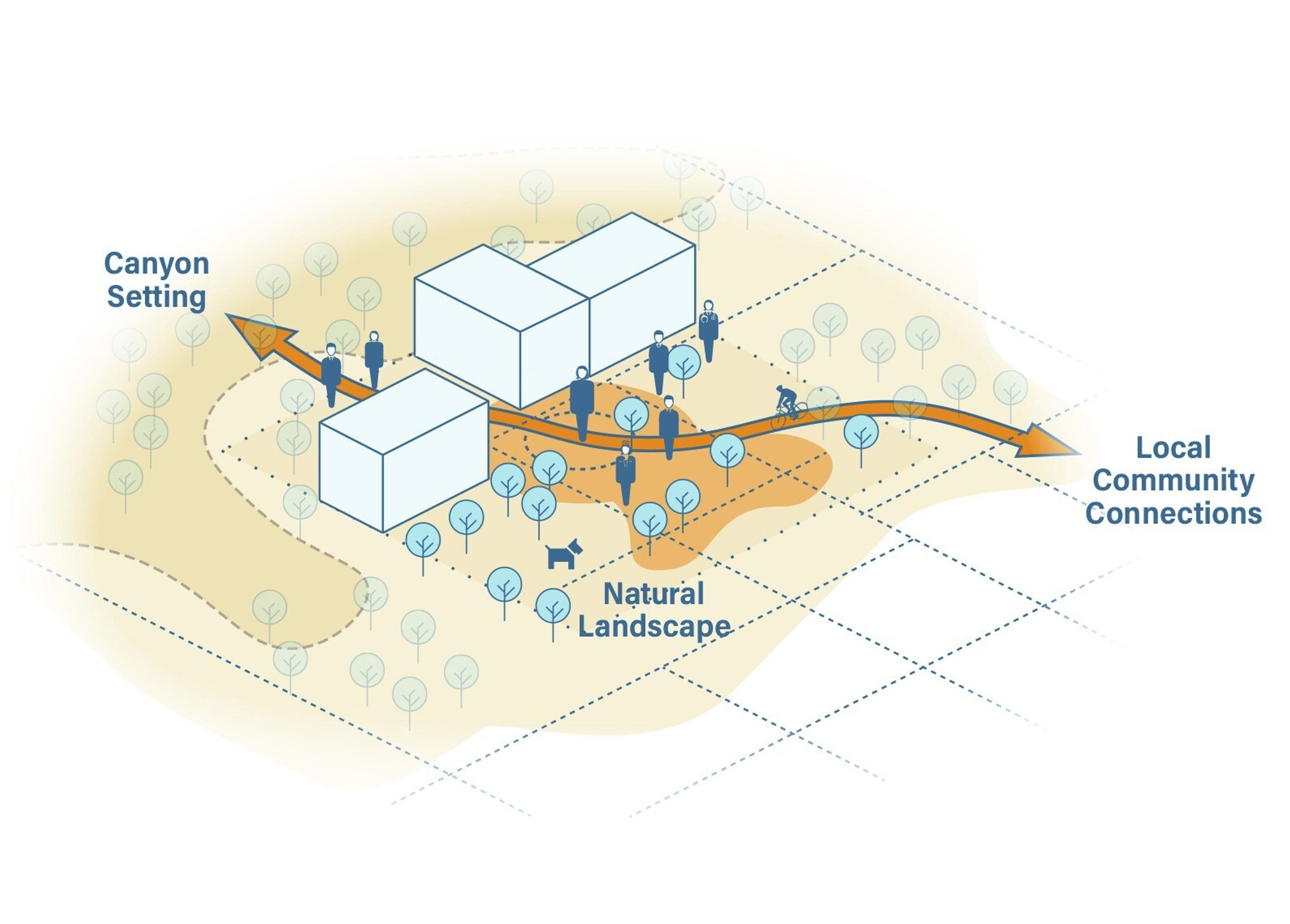
Conceptual future campus open space types are organized to provide a variety of public and private opportunities.
Open space
Open space will be a defining feature of the new campus, creating a sense of place through sustainable, context-sensitive design. Strategically connected open spaces will serve the public and UCSD community, offering vibrant gathering places for recreation and events, as well as tranquil spaces for reflection and study.
Each space will be carefully curated, featuring distinct landscape treatments that enhance connectivity, from preserved native canyon ecosystems to lively, walkable streetscapes. Safety and security are seamlessly integrated through evidence-based design strategies—including thoughtful architecture, strategic fencing, advanced surveillance, and optimized pedestrian and vehicular movement—ensuring a secure and welcoming environment.
Guided by Crime Prevention Through Environmental Design (CPTED) principles, the open space framework enhances wayfinding, arrival experiences, and overall campus identity. This highly functional, well-designed landscape will create a compelling contrast to the dense urban fabric, reinforcing a resilient, accessible, and future-ready campus.
Conceptual future campus open space types are organized to provide a variety of public and private opportunities.
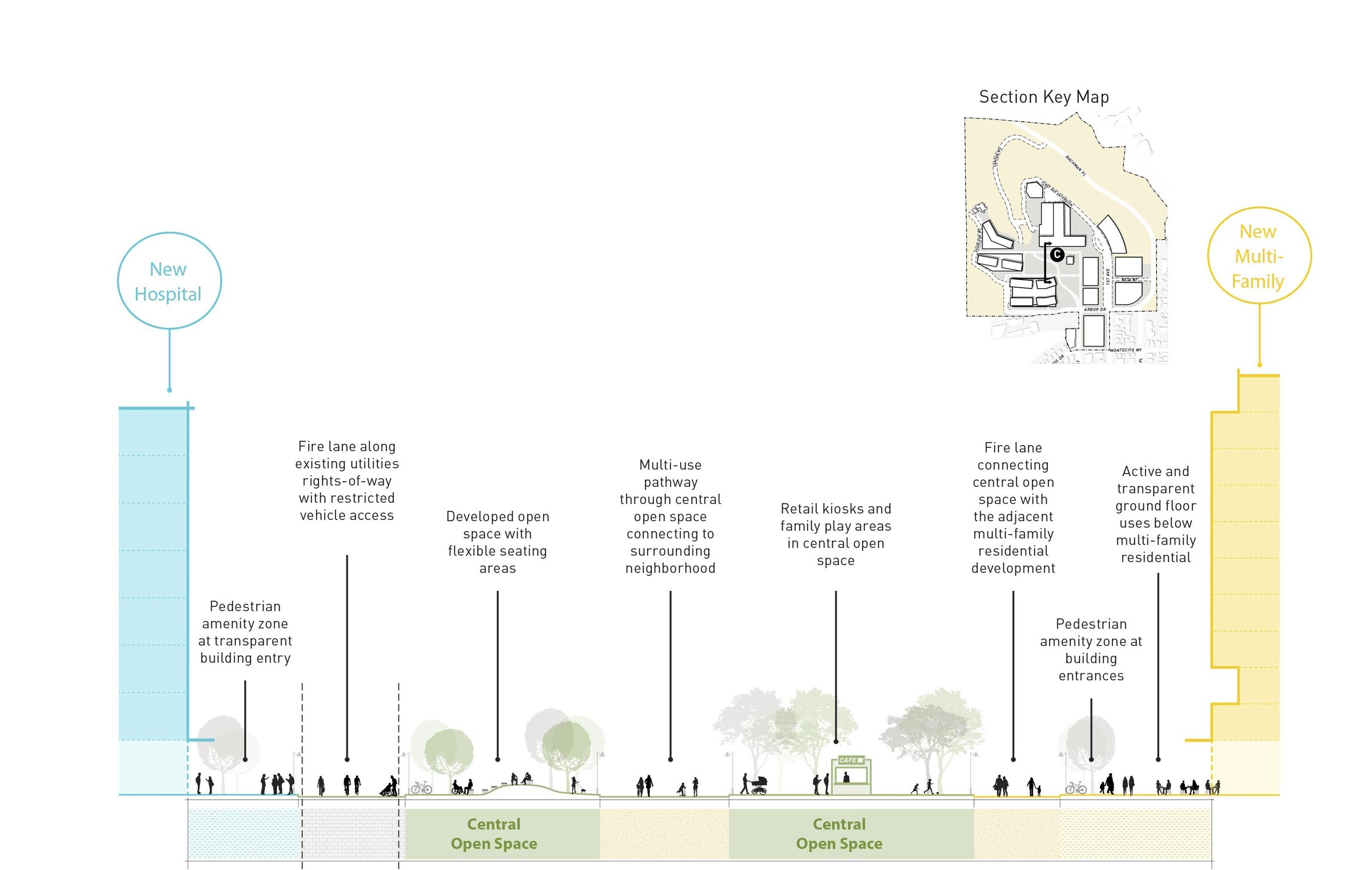
Central open space
The concept of a redefined central open space provides a dynamic environment for a range of uses.
Similar projects



/

Talk with us
Complex challenges need fresh perspectives and deep expertise. Connect with our team to explore how we can help you create spaces that make a real difference.